• | The Three Biggest Risks of Buying Railing Hardware Through Third-Party Marketplace Listings |
• | What Are Architectural Glass Railing Installers Buying Online? |
• | How Can Railing Standoffs Fail? |
• | How to Evaluate Any Hardware Purchase |
Glass railings are everywhere right now — and so are deals on open marketplace platforms that look too good to pass up. But here's what most buyers don't stop to consider: railings aren't décor.
As Andrew Chatfield, product manager of architectural railing at Bohle | Portals, put it in a recent US Glass magazine article on the booming demand for glass railing systems, "Railings are a life safety product. Installers must understand how they're affixed, the surrounding conditions, windloads and substrate."
He stressed that code requirements vary by state, that even experienced installers need technical guidance to get it right — and that the stakes are real.

Bohle Adjustable Standoffs | Project Photo Courtesy of Ever-Ready Glass, Phoenix, AR
So what happens when you skip the vetted manufacturer or trusted retailer and buy railing hardware through a third-party marketplace listing instead?
You might save money upfront, but you're likely trading it for risk you can't see until it's too late.
A note on what we mean by "marketplace." Not all online purchasing is created equal. Buying from a trusted, specialized retailer like DKHardware or McMaster-Carr — one that stands behind the products it sells and can speak to the engineering and provenance of what's on its shelves — is a different transaction entirely.
The risk we're describing is specific to open marketplace platforms like Amazon and eBay, where third-party sellers can list hardware under generic descriptions with no verifiable accountability. The question isn't where the listing lives. It's who stands behind it.
The Three Biggest Risks of Buying Railing Hardware Through Third-Party Marketplace Listings
Even seasoned installation experts can fall prey to these three risks. No amount of field experience can make up for hardware that was never properly tested in the first place.
1. Unknown Load Ratings and Structural Integrity
Railing hardware — base shoes, spigots, standoffs, clamps — is engineered to bear specific loads under specific conditions. Code-compliant systems are tested to meet requirements like the IBC's 200-lb concentrated load and 50-lb/ft uniform load for guardrails.

Hardware from marketplace listings rarely comes with verified load test data, PE-stamped engineering, or ICC-ES evaluation reports.
An experienced installer might recognize quality hardware by look and feel, but there's no way to eyeball whether a base shoe will hold under a crowd-surge load on a rooftop deck.
If it doesn't, the installer's name is on the job — not the seller's.
2. Material and Finish Inconsistency
Railing hardware from reputable manufacturers is typically 316 stainless steel for exterior use or 304 for interior, with consistent alloy composition and finish.

Marketplace hardware is often vaguely described — "stainless steel" with no grade specified — and may use inferior alloys, thinner wall thicknesses, or coatings that look right on arrival but pit, corrode, or discolor within months, especially in coastal or high-moisture environments.

An experienced installer may not catch the difference until callbacks start rolling in, and by then the seller may have disappeared from the platform entirely.
3. No System-Level Engineering or Compatibility Guarantee
Professional railing hardware is designed as a system — components are engineered to work together and are often covered under a single warranty and a single engineering package.
When you buy individual pieces from a marketplace listing, you're assembling a Frankenstein system with no guarantee that the base shoe, glass adapter, and top rail were ever tested together.
That means no engineer will stamp it, no manufacturer will warranty it, and if an AHJ asks for documentation during inspection, you're on your own. Even the most skilled installer can't engineer accountability into a box of mismatched parts.
Floating Stairs: The Modern Design Element That Elevates Any Space
What Are Architectural Glass Railing Installers Buying Online?
The truth is that railing hardware can be significantly cheaper through third-party marketplace listings, and the most popular items are smaller fittings like standoffs and spigots.
"I think there's an assumption that since it's a smaller piece of hardware, there's less risk in buying it online without engineering documentation," says Chatfield. "The assumption is that smaller hardware has less of a likelihood to fail. But it's an incorrect assumption."
A standoff may look like a simple bolt-and-clamp assembly, but it's doing critical structural work — it's the connection point between a glass panel and whatever it's mounted to.
How Can Railing Standoffs Fail?
Every standoff in a railing system is handling a share of the load, and that load isn't just the weight of the glass. It includes wind pressure, human impact, and the lateral force of someone leaning or falling against the railing.
A standoff that's underspec'd in thread engagement, wall thickness, or material grade may hold up fine under static conditions but fail under the sudden, dynamic load it was actually installed to resist — which is exactly the moment it matters most.

And failure doesn't always look dramatic. A standoff with poor tolerances can slowly loosen over time as thermal cycling and vibration work against an imprecise fit.
The glass starts to shift. A panel develops play. By the time someone notices, the system has already been compromised — and retroactively diagnosing which $4 fitting caused the issue across a 60-foot run of railing isn't just difficult, it's expensive. In many cases, the entire system has to be disassembled and re-evaluated.
What's the Worst That Could Happen?
In the worst case, a standoff fails under impact — someone stumbles on a rooftop terrace, a child runs into a balcony panel — and the glass gives way entirely. At height, that's not a warranty claim. It's a catastrophe.

And the liability trail leads straight back to whoever selected and installed the hardware, not to a third-party seller operating under a name no one can trace.
How to Evaluate Any Hardware Purchase
Whether you're buying online or in person, from a specialized retailer or a distributor, the same questions apply:
• | Can you reach a real person who knows the product? |
• | Is there engineering documentation attached to what you're buying? |
• | Is the manufacturer identifiable and reachable if something goes wrong? |
• | Are the components part of a tested, warranted system — or a collection of individual parts from unknown sources? |
If the answer to any of those is no, that's your signal to look elsewhere. Saving a few dollars per fitting isn't a deal if it costs you a callback, a failed inspection, or worse.
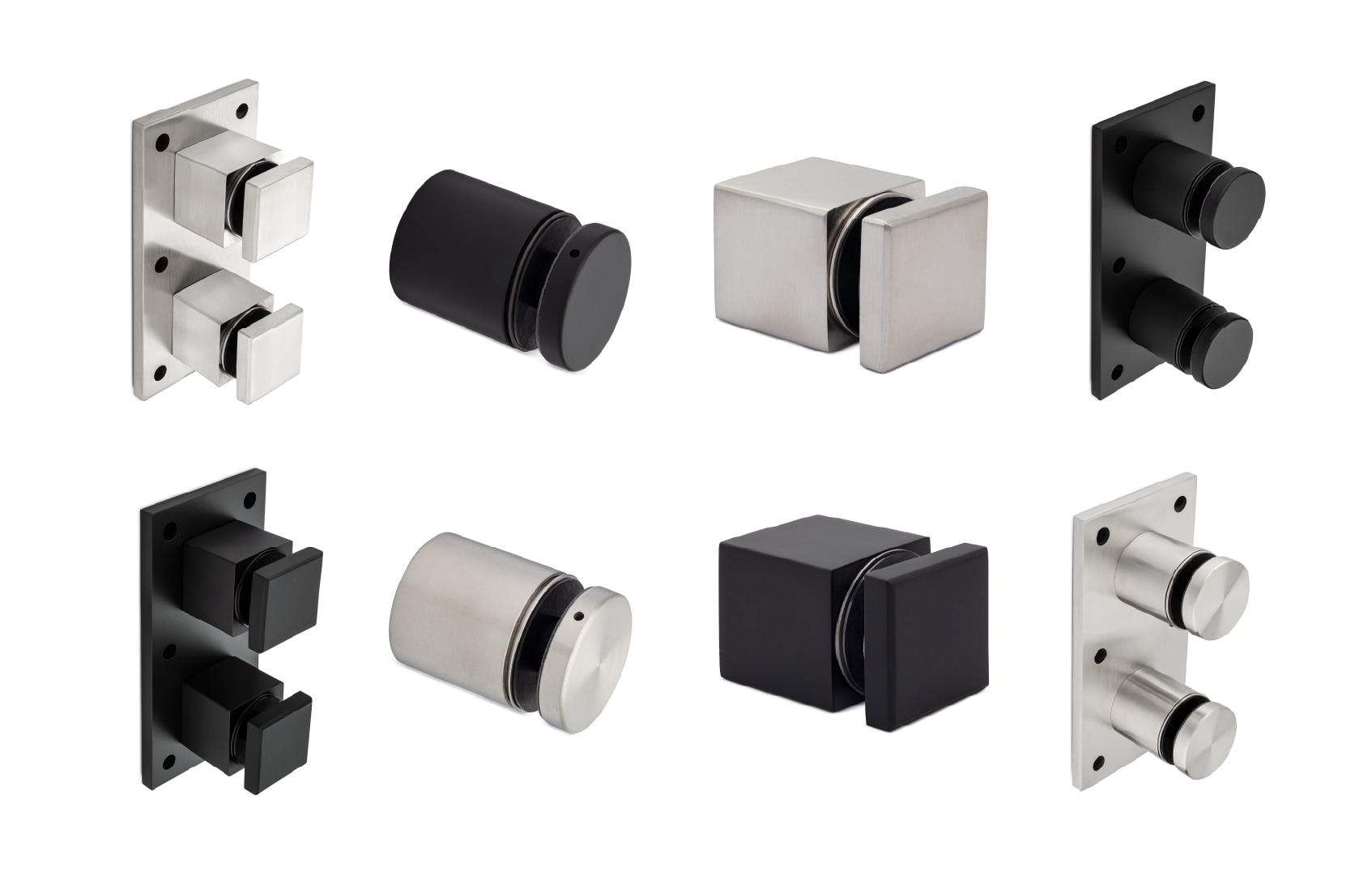
If you're working on a railing project and want to make sure you're specifying hardware that's actually engineered for the job, Andrew Chatfield is a good person to talk to. Reach him at andrew.chatfield@portalshardware.com — for 36 years he's helped fabricators, installers, and specifiers across the world navigate code requirements, substrate challenges, and system selection.
And take a look at Bohle's full line of architectural railing products, including third-party engineered and tested standoffs and spigots built for real-world performance.